
Distributor Authorization
How to Get Approved by Wholesale Distributors as an Amazon Seller in 2026
-1200x627.png&w=3840&q=75)
Wholesale sourcing on Amazon comes down to two stages: finding wholesale distributors and getting approved by them. New sellers underestimate the second one.
You fill out an application. Two weeks later, you get a one-line rejection, or you hear nothing at all. Then you try again, nine more times.
Most sellers who try to scale into wholesale hit this same wall. They get approved by a fraction of the distributors they apply to, and the ones that say no rare say why. The 2026 environment makes it harder than it was 3 years ago. Amazon's invoice requirements have tightened. Brands gate more aggressively. Distributors that used to open accounts casually now screen new Amazon sellers the way banks screen loan applications.
But rejection isn't random. Distributors reject for a short list of consistent reasons. Most are mechanical, fixable, and invisible to sellers who only see their side of the application. This guide is about what's happening on the other side of the desk.
Why Wholesale Distributors Reject Amazon Sellers (And How to Overcome It)
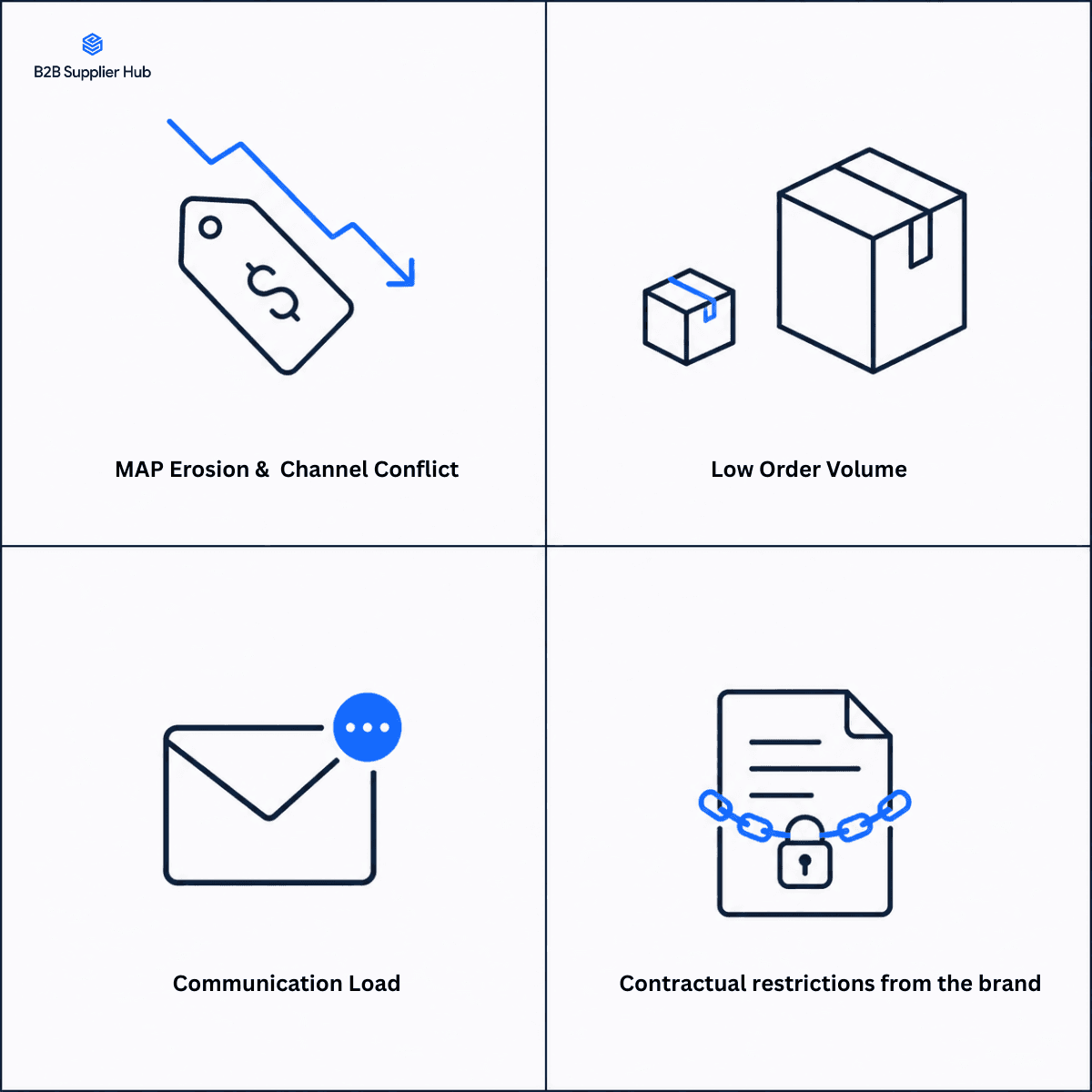
Most rejection isn't personal and isn't about your paperwork. It's about four concerns that have hardened over the last three years.
MAP Price Erosion and Channel Conflict on Amazon
Brands set MAP pricing so their resellers stay profitable. When new Amazon sellers undercut it, every other reseller has to follow them down or lose volume. When the brand notices, they call the distributor who supplied the undercutter. Sometimes that distributor loses the brand entirely.
Low or Inconsistent Order Volume Signals
Distributors make their money on customers who reorder. A new Amazon seller who places a $500 order and then disappears for six months isn't a customer; they're a cost center. Most distributors would rather work with a smaller pool of high-volume accounts than process a thousand small ones.
High Support Load and Poor Communication from Resellers
Amazon sellers can be high maintenance. They chase invoices for ungating, push for faster ETAs, and file chargebacks that the distributor has to fight. If a new applicant is emailing multiple times in a week before even getting approved, it’s a clear sign of what that relationship might look like in the long run.
Brand-Level Contractual Restrictions on Online Reselling
This one most new sellers don't know about. Many brands explicitly require their distributors not to sell to Amazon sellers. The distributor isn't rejecting you. They're protecting their contract with the brand. They might not say it outright, but that’s the reality.
Understanding which of these four issues is at play tells you whether to push, fix something, or move on.
Documents Wholesale Distributors Require (+ What Gets You Approved Faster)
Most rejection at the document stage is about consistency, not completeness. The application fails because the name on the EIN doesn't match the name on the resale certificate, or the address on the business bank account doesn't match the one on Seller Central. Distributors that can't reconcile your identity across documents simply move on.
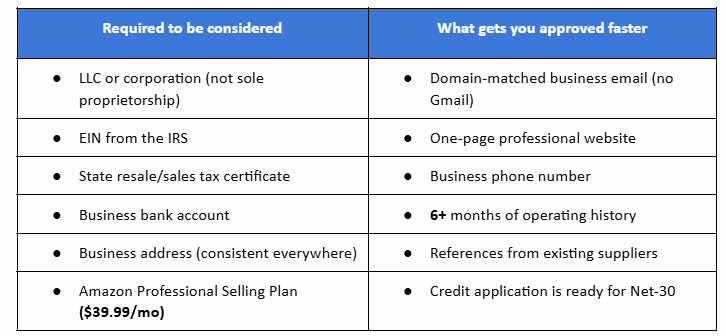
A few notes on what matters most:
- Most large distributors reject sole proprietors outright. The implication is that you're not a real business yet. Forming an LLC costs a few hundred dollars and a weekend's work.
- The resale certificate (also called a reseller permit, sales tax permit, or seller's permit, depending on your state) is what lets you buy goods without paying sales tax at the time of purchase. In Washington state, for example, the Department of Revenue issues permits valid for four years, two for newer businesses. Other states vary. Without one, no legitimate distributor will open an account.
- One of the biggest reasons for silent rejections is mismatched addresses between your EIN, resale certificate, business bank account, and Seller Central. They're the same mismatches that will fail Amazon's invoice review later. So, it’s best to sort them out once and for all before you start applying anywhere.
What Distributors Really Evaluate Beyond Your Documents
Once your paperwork clears, the human review begins. Distributors are reading four soft signals.
Your Order Volume Signal (and Why It Matters More Than You Think)
Distributors want to know that you’re serious about reordering. Instead of a vague introduction, provide a clear and specific statement about your monthly purchase goals by category. For example, "We're targeting $8,000–$12,000 per month in tools and hardware across two to four brands" sounds much more like a genuine buyer. In contrast, "Looking forward to growing together" sounds like someone just browsing.
Channel Mix and Disclosing Amazon as a Sales Channel
Be honest about selling on Amazon. The distributor will look you up within ten minutes, and if they find stores you didn't mention, the relationship is over before it started. A better approach is to highlight the strengths of your operation first, like your category focus. Your monthly volume. The other channels you sell on. Then mention Amazon clearly when it comes up. If you also sell on Walmart, eBay, Shopify, or B2B, make sure to mention that too. A distributor that won't supply Amazon-only sellers may still supply a multi-channel reseller.
How the Professionalism of Your First Outreach Is Judged
Pay attention to spelling, tone, and how quickly you respond during an outreach campaign. Distributors are not impressed by urgency or by long emotional appeals. They're impressed by clarity. A short, specific introduction that names the brands you're interested in, your target volume, your business background, and the documents you've attached lands well. Anything that reads as a template gets filed accordingly.
Time in Business, Trade References, and Credibility Signals
If you've been at this for over a year and you've got other supplier relationships, mention them (with permission). References from real wholesale accounts cut through skepticism faster than anything else you can send.
From our Sourcing Desk: Back in 2022, our sourcing team identified a USA industrial products giant with multi-billion-dollar revenue. They carried hundreds of brands that can be sold on Amazon, but our team reported rejections a couple of times. We decided to go deep to find the root cause of rejection. They were asking for documents we couldn't provide, like a "Permanent Resident Card." We got on a call with them and addressed their privacy concerns and provided alternate documents like a driving license and a bank statement (hiding receiver/sender names). They opened a reseller account within 24 hours after that.
Distributor Approval Doesn't Mean You Can Sell on Amazon: The Three-Gate Problem
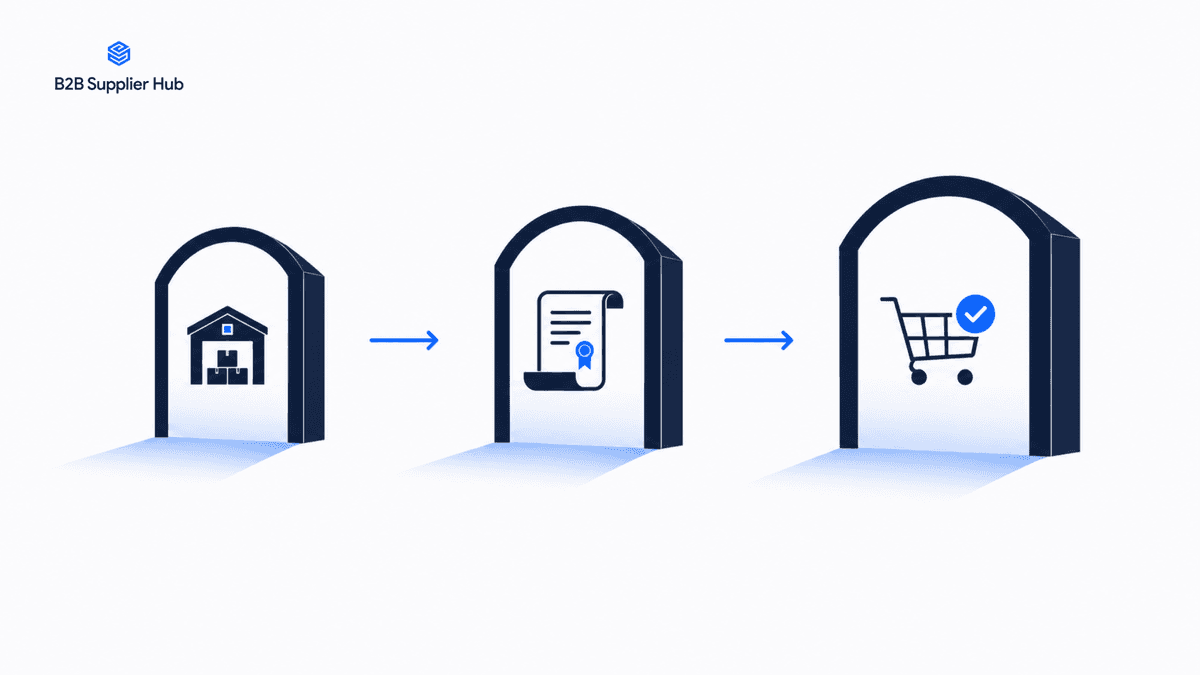
This is the single most expensive misunderstanding in the wholesale reseller business. Many sellers wire money for inventory they can't legally sell because they think that once they get through one gate, the rest will automatically follow. But there are actually three distinct gates, each with its own approval process; clearing one tells you nothing about the next two.
Gate 1: Getting Your Wholesale Distributor Account Approved
- What it means: You can place wholesale orders with this distributor.
- What you need: LLC, EIN, resale certificate, business bank account, and address consistency.
- What it gives you: The ability to buy. Nothing about Amazon yet.
Gate 2: Obtaining Brand Authorization to Resell on Amazon
- What it means: The brand owner has formally permitted you to sell their products on Amazon.
- What you need: A Letter of Authorization (LOA) from the brand, where the brand requires one. According to Amazon Seller Central, invoices, distribution agreements, reseller agreements, retailer receipts, purchase orders, and bills of lading do not count as Letters of Authorization. The LOA is a formal IP license document with specific required terms, and Amazon may verify it by contacting the brand directly.
- What it gives you: The brand's written permission to resell on Amazon. Doesn't open the Amazon marketplace gate itself.
Gate 3: Passing Amazon's Ungating Requirements
- What it means: Amazon has approved your seller account to list the brand or category.
- What you need: A commercial invoice from an authorized distributor, not a retail receipt. Dated within the last 90 to 180 days, depending on the category. Showing at least 10 units of the product purchased. Business name and address match Seller Central exactly. Some restricted categories also want safety certificates or test reports. Amazon may contact the supplier to verify the document.
- What it gives you: The "Apply to Sell" gate opens. You can list.
Just because a distributor is willing to sell you ten units of Brand X doesn’t mean you’re good to go for selling it on Amazon. Amazon may still reject your ungating application or accept it and then receive an IP complaint from the brand a month later that suspends your listing. Many sellers find themselves in a tough spot with inventory they can’t list because they buy first, only to deal with the gating issues later.
How to Build Your Distributor Application Packet (And What to Expect)
A strong application packet has four things:
- A short cover email
- A fully completed application form
- Scanned copies of your EIN confirmation and state resale certificate
- A credit application if you're requesting Net-30 terms. Include references if requested.
Response timelines vary widely. Smaller distributors often respond within 24 to 48 hours. Larger ones take one to four weeks, sometimes longer during seasonal peaks. If you don’t hear anything after two weeks, it’s often a sign of a soft rejection. A polite follow-up after ten business days is totally appropriate, but sending a third email might not be the best move.
When you're approved, ask explicitly about payment terms. Most distributors start new accounts on prepay, using wire transfers or credit cards, and move to Net-30 after a defined order history. Net-30 matters more than most new sellers realize. It's the difference between needing capital for six weeks of inventory and needing capital for two. If a distributor offers Net-30 from day one with no track record, treat that as a flag, not a perk.
Got Rejected by a Distributor? Your Step-by-Step Recovery Playbook
Rejection is information. Most of it is fixable, and most of the time, the fix isn't what new sellers assume.
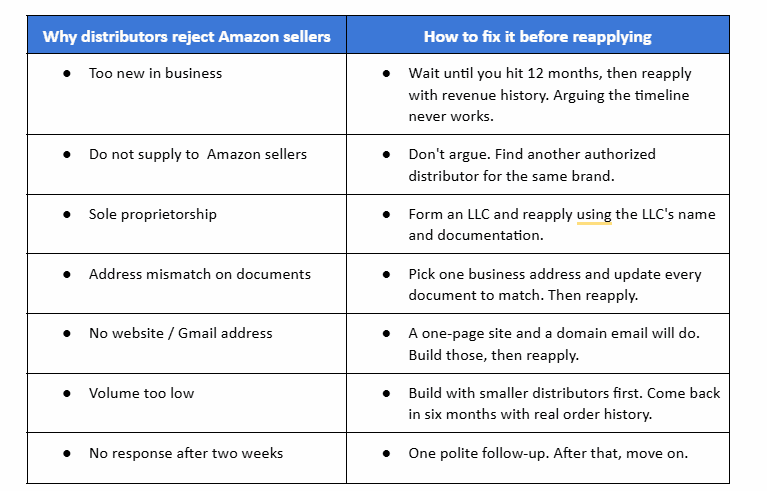
One key insight that many sellers overlook is that the top-tier authorized distributor isn’t the only option out there. Most big-name brands actually work with a variety of authorized distributors across different levels, like regional players, category specialists, and smaller wholesale houses. While the larger distributors tend to have stricter requirements, the smaller ones often carry the same brands with more flexible approval processes. So, if you get turned down by one distributor in a brand's network, it doesn’t mean the brand has rejected you as well.
This is the part of the problem B2B SupplierHub is built to solve. Type a UPC, see every supplier carrying that product, and a rejected application becomes a routing decision instead of a wall. The work of identifying which authorized distributors carry a brand used to take hours of phone calls and broker introductions. Now it collapses into a search.
Getting Approved Is Possible — Here's How to Start Today
The wholesale landscape in 2026 is definitely more challenging compared to 2020. Amazon has tightened its invoice requirements. Brands are being more selective, and distributors are ramping up their screening processes. A lot of new sellers' face rejection due to mechanical issues like applying under the wrong entity type, having mismatched addresses, sending an unconvincing first email, or not understanding the difference between distributor approval and brand authorization.
From our Sourcing desk at Leverify: Sourcing has evolved over the last decade, especially sourcing for third-party marketplaces. It's not about sourcing a product anymore; it's about sourcing products from an authorized, reliable, and long-term partner who has the potential to stand with you through thick and thin. We formed partnerships with distributors who were not authorized, but they claimed to be authorized and allowed by brand X to sell to Amazon sellers. But when the brand approached us, they could not help with IP complaints (they stopped communication). On the other hand, we have reliable suppliers who understood the situation, tried to approach the brand on our behalf, and resolved the issue alongside us. A reliable and authorized distributor requires more effort, strict due diligence, extensive documentation (most of the time), excellent persuasive communication, and a transparent relationship. A skillful sourcing team with the right direction is key to signing up and retaining Tier 1 suppliers, especially with increasing online fraud and marketplace challenges
By fixing the mechanical issues and understanding the three gates, you can significantly reduce your rejection rate. The sellers who scale wholesale aren't the ones who got lucky with their first application. They're the ones who got the system right and applied it to twenty distributors with the same packet.
The B2B SupplierHub Team
Wholesale & sourcing
Stop hunting suppliers by hand. Type a UPC instead.
B2B Supplier Hub shows the suppliers in our network carrying a product on one page: wholesale cost, stock, and retail price side by side. Free to search, no card required.