
Distributor Authorization
How to Find the Authorized Distributors for Any Brand (2026 Step-by-Step Guide)
Finding the authorized distributor for a brand is not complicated once you understand how brand distribution actually works. The problem is that most sellers look in the wrong places first. They search supplier directories, browse trade show lists, or ask in seller communities and end up with a middleman, a gray market source, or nothing useful at all.
Want to skip the manual steps? Look up any brand's authorized distributors here.
This guide walks you through the right sequence. Start with the brand, work outward, and verify before you commit. By the end, you will know exactly how to find the authorized distributor for any brand you want to carry and how to confirm that the supplier you found is actually the real thing.
What "Authorized Distributor" Actually Means
An authorized distributor is a company that has a formal contractual relationship with the brand to purchase products at wholesale and resell it to approved retailers and resellers. The brand decides who gets to be an authorized distributor. They set the terms, the territory, the product mix, and the reseller requirements.
This distinction matters on Amazon. When Amazon asks for an invoice to verify your selling rights, they are not just checking whether the invoice looks real. They are checking whether the supplier on that invoice is recognized by the brand as an authorized source. An invoice from a supplier who acquired the product three steps removed from the brand can look completely legitimate and still get rejected because the chain of authorization is broken.
When you are looking for an authorized distributor, you are looking for a company that sits on the authorized side of the brand's distribution map, not just any supplier who happens to carry the product.
Why Most Sellers Start in the Wrong Place
The instinct most sellers have is to search outward: Google the brand name with 'wholesale distributor,' browse marketplaces, or dig through supplier directories. This approach produces a lot of noise. You end up with unauthorized resellers, liquidators, gray market importers, and middlemen who have the product without brand authorization.
The faster and more reliable method is to start with the brand itself and work outward. The brand knows exactly who is authorized to distribute its products. Starting their cuts through the noise immediately.
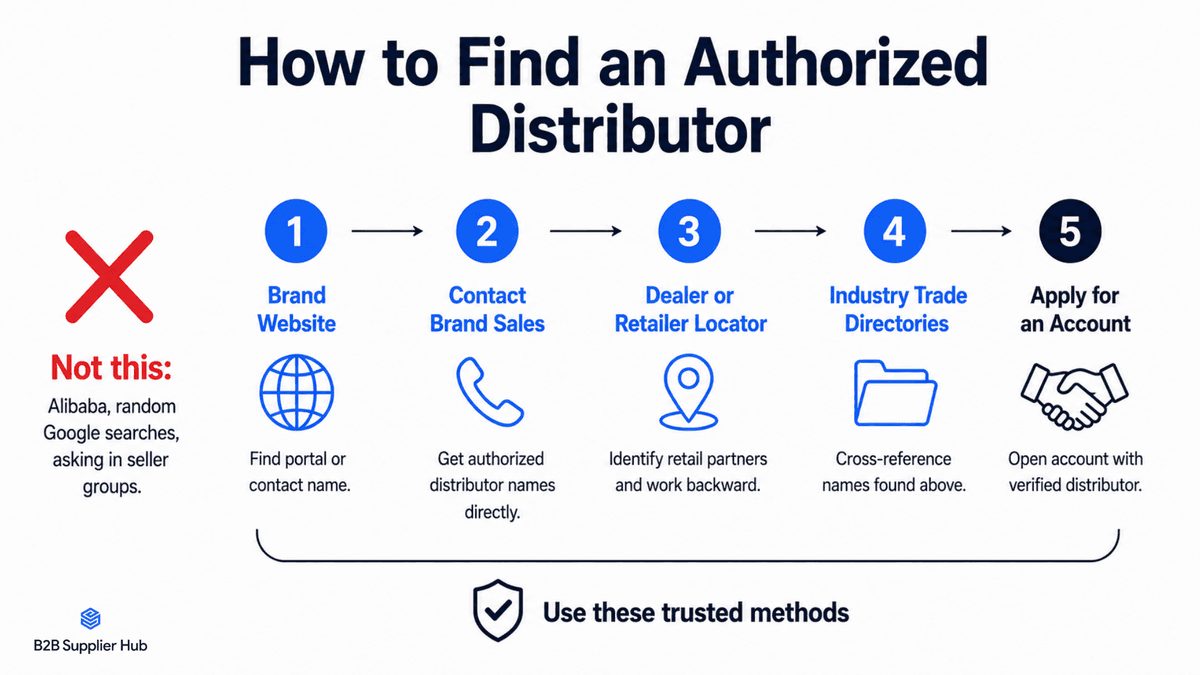
Step 1: Go to the Brand's Website First
The first place to look is always the brand's own website. Many brands publish their authorized distributor information in one of three places: a "Where to Buy" or "Find a Retailer" page, a "Become a Reseller" or "Wholesale Inquiries" page, or a dedicated dealer portal.
Not every brand makes this easy. Some publish a full distributor list publicly. Others only share that information after you apply. But even if the brand does not publish a distributor list, their website will usually give you the name of a contact in their sales or channel management team, and that contact is your next step.
When you are on the brand's website, look specifically for a "Where to Buy" or "Retail Partners" section, a "Wholesale" or "Trade" link in the footer, a dedicated portal URL, or contact information for a sales representative or channel manager.
Step 2: Call or Email the Brand's Sales Team Directly
This is the step most sellers skip because it feels uncomfortable. Do not skip it. It is the most direct and reliable method available.
Call the brand and ask one specific question: "Can you tell me who your authorized distributors are for your product line in the US?" Many brands will answer this directly. Some won't respond at all. Follow up once, then move to the next step rather than waiting. Their sales team fields these calls regularly. They want their products in the hands of professional resellers who are sourcing correctly and pointing you to an authorized distributor serves that interest.
Be straightforward about who you are. You are a professional reseller interested in carrying their products, and you want to make sure you are sourcing from the right place. This framing positions you as a serious buyer, not a random inquiry.
What you are trying to get from this conversation: the names of their authorized distributors, whether they work with distributors at all or sell direct to approved resellers only, whether there is an application process to become an authorized reseller, and whether there are MAP policies or channel requirements you need to know before you start selling.
Document this conversation. Write down the date, the name of the person you spoke with, and what they told you. This documentation can be useful if you ever need to demonstrate your sourcing chain to Amazon or to the brand.
Step 3: Use the Brand's Dealer or Retailer Locator
Many brands maintain a dealer or retailer locator on their website. It is primarily designed to help consumers find local stores, but it also reveals who the brand's retail partners are. If you can see which retailers carry the brand, you can work backward. Large retailers typically source directly from the brand or from one of their primary authorized distributors. Mentioning a specific retailer when you call the brand opens a more focused conversation about the distribution model.
Some brands also announce their distributor partnerships through press releases or LinkedIn posts. A search for "[brand name] distribution agreement" or "[brand name] authorized distributor announcement" will sometimes surface this information directly.
Step 4: Check Industry Trade Directories
After exhausting the brand-direct approach, trade directories are your next most reliable source. Unlike general consumer directories, trade directories require suppliers to verify their business credentials before listing.
Supplier directories like Worldwide Brands and Wholesale Central can surface names worth investigating, but that's where their usefulness ends. A directory gives you a company name and a contact form. It doesn't tell you what the supplier charges, what's in stock, whether they're authorized for the brand, or whether you'd even be approved to buy. Every name you pull from a directory still needs the full verification and comparison work covered in this guide. Trade show exhibitor lists, particularly from events like ASD Market Week, are often more useful because they show which distributors are actively representing specific brands right now.
Finding a distributor's name in a directory is the beginning of your verification process, not the end. A directory listing does not make a supplier authorized. You still need to verify their
relationship with the brand.
Step 5: Verify Authorization Before You Place Any Order
Once you have identified a distributor who claims to carry the brand, verify their authorized status before placing an order. There are three ways to do this.
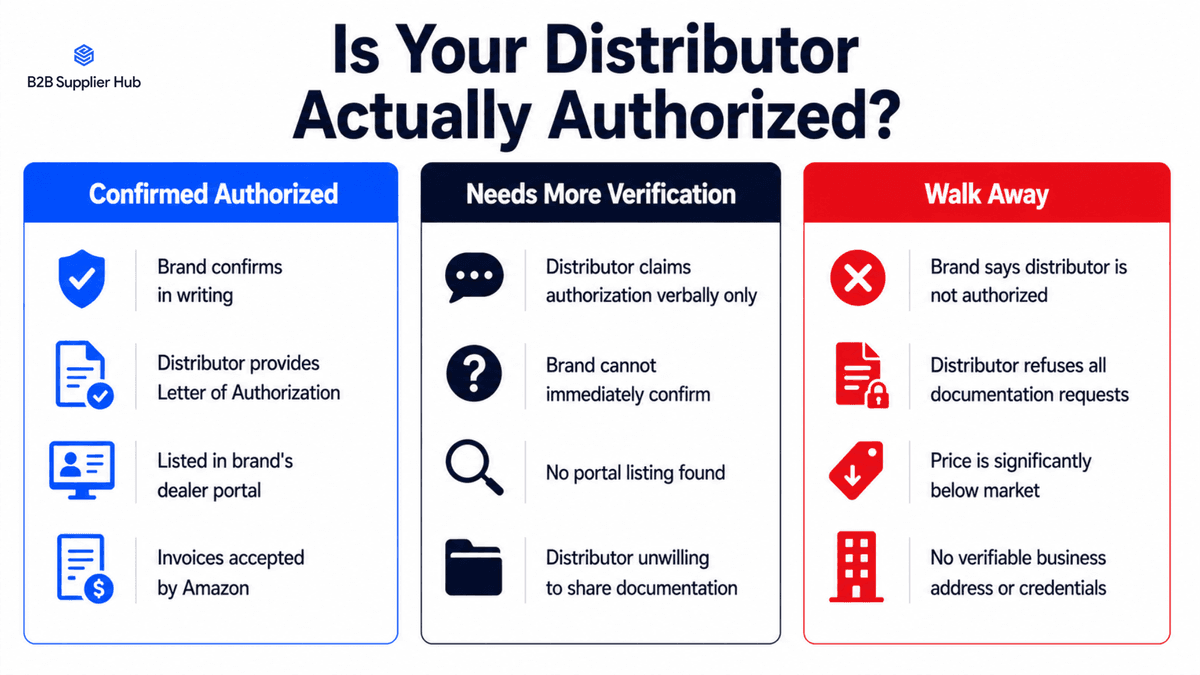
The most reliable method is to go back to the brand. Contact the brand's sales or channel compliance team and ask directly whether the distributor is authorized to resell their products in the US. Brands will confirm this for legitimate distributors without issue. If the brand hesitates or cannot confirm, that is your answer.
The second method is to ask the distributor for their authorization documentation. A legitimate authorized distributor will have a Letter of Authorization from the brand, a distributor agreement, or both. They should be willing to provide the Letter of Authorization on request. If a distributor refuses to show any documentation of their brand relationship, treat that as a significant red flag.
The third method applies to brands with online reseller portals. Some brands require authorized distributors to be listed in their portal, and resellers can access the portal to check the distributor's status.
What to Do When a Brand Does Not Use Distributors
Some brands sell direct to approved resellers only and do not use distributors at all. This is more common than many sellers realize, particularly among premium brands, niche manufacturers, and brands that have had distribution problems in the past.
If a brand tells you they do not work with distributors, you have two options. The first is to apply directly to become an authorized reseller with the brand. This typically requires meeting volume requirements, maintaining a professional storefront, and agreeing to MAP policies. The process takes longer, and the requirements are stricter, but the resulting authorization is the strongest you can get.
The second option is to accept that this brand is not accessible at your current stage and move on. There is no reliable workaround for a brand that has closed its distribution, and attempting to source through unauthorized channels creates invoice problems and account health risks that can end your business with that brand permanently.
Red Flags That Tell You a Supplier Is Not Authorized
Knowing what to look for on the wrong side is as important as knowing how to find the right distributors.
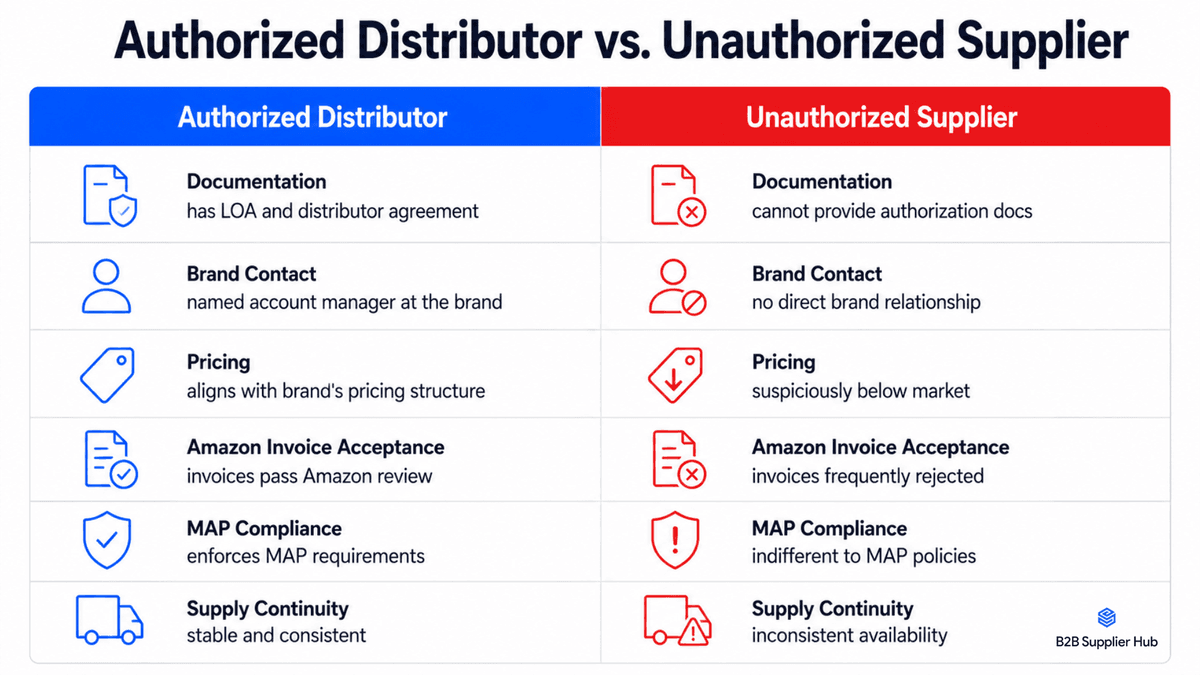
If a supplier cannot name the brand representative they deal with, that is a problem. Every authorized distributor has a brand contact. They know who they report to and who to call when a compliance issue arises.
If the pricing is significantly below what other legitimate distributors charge, that is a problem. Authorized distributors operate within the brand's pricing structure. Prices that are dramatically lower than market usually indicate product from a different supply chain, whether liquidation, gray market imports, or diversion.
If the supplier cannot or will not produce any documentation linking them to the brand, that is a dealbreaker. Ask for the Letter of Authorization. If nothing is available, do not proceed.
Building a Relationship with an Authorized Distributor That Lasts
Finding an authorized distributor is the beginning of a supplier relationship, not the end of a search. Once you have been approved for an account, communicate consistently, pay invoices on time, and be transparent about your sales channels, including Amazon. Distributors who trust that you are operating professionally are far more likely to flag new products, extend better terms over time, and support you if a compliance issue ever arises.
The resellers who build durable wholesale businesses treat their distributor relationships as partnerships, not transaction pipelines. Authorized distributors have options about who they sell to. Make sure you are the kind of account they want to keep.
Where to Find Pre-Verified Supplier Relationships
Everything in this guide works. It also takes time. A brand call here, a locator search there, a verification round before every first order. Done properly, finding and confirming the authorized distributors for a single brand can take days, and you repeat it from zero for every new brand you want to carry.
This is the part of the problem B2B Supplier Hub is built to solve. Type a UPC, see every supplier carrying that product, with authorization status visible alongside cost, stock, and terms so the search that used to take days of calls and directory digging collapses into a lookup. The verification judgment stays yours. The hours of finding who to verify don't.
The Short Answer to Find an Authorized Distributor for Any Brand
Start with the brand. Contact their sales team. Ask for the names of their authorized distributors. Verify the distributor's status before placing an order. Document everything.
The sellers who struggle to find authorized distributors are almost always the ones who start with directories or other sellers instead of going directly to the source. The brand knows who is authorized. Go ask them.
Frequently asked questions
01How do I know if a distributor is actually authorized by the brand?
02What documents should I have from an authorized distributor before selling on Amazon?
03Does buying from an authorized distributor automatically mean I can sell on Amazon?
04Can I find authorized distributors for any brand, or are some off limits?
The B2B SupplierHub Team
Wholesale & sourcing
Stop hunting suppliers by hand. Type a UPC instead.
B2B Supplier Hub shows the suppliers in our network carrying a product on one page: wholesale cost, stock, and retail price side by side. Free to search, no card required.